At its Mid-Year Review, the European Circular Composites Alliance (ECCA), a sectorial alliance of EuCIA, highlighted progress across its five working groups and outlined next steps to scale circular composites across the value chain. Updates from all five groups are now available on the EuCIA website.
Launched at JEC World 2025 with founding member JEC, ECCA provides a collaborative platform for the composites value chain to advance circularity. It now includes more than 220 organisations from 27 countries. After a first year focused on membership, governance and strategy, the alliance is now shifting to measurable action.
Road Vehicles & Public Transportation Working Group
Chair: Charles Göbbels, Reprocover; vice-chair: Thomas Wegman, AOC
- Focus to date: The group has focused on understanding how composite materials can be recovered more effectively from end-of-life vehicles. In the first half of 2026, members worked with automotive recyclers and dismantling organisations to understand current practices and launched a dismantling case study to test whether separating composite components before shredding can improve recycling outcomes.
- Next priorities include: completing the case study, engaging OEMs and Tier 1 suppliers, improving access to material data, and advancing practical approaches to composites identification and traceability.
Construction Working Group
Chair: Julia Minici, Afterwind; vice-chair: Lorenzo Grazia, Polynt Group
- Focus to date: The group is building the foundations needed to accelerate circular composites in construction. It reviewed construction-related composite waste streams, recycling technologies, and opportunities to reuse recycled composite materials in new construction applications. A major focus has been identifying the stakeholders needed to build a complete circular ecosystem.
- Next priorities include: developing a practical roadmap, advancing certification pathways, and supporting demonstration projects to help scale circular composites in Europe’s construction sector.
Industrial & Recreational Working Group
Chair: Enrico Benco, GS4C srl; vice-chair: Sam Donegani, Composite Braiding Ltd
- Focus to date: The group highlighted traceability as a key enabler of composite circularity. Members reviewed recycling technologies, mapped industry capabilities, and discussed emerging approaches to composite material traceability, including Digital Product Passports (DPPs). The group also began exploring a longer-term vision for Raw Materials as a Service (RMaaS).
- Next priorities include: defining priority traceability requirements, engaging with external initiatives, and assessing how ECCA can contribute to practical, industry-wide approaches that accelerate composite circularity.
Aerospace & Defence Working Group
Chair: David Tilbrook, Hexcel Composites; vice-chair: Gabriele Badini, Westlake
- Focus to date: The group has focused on demonstrating how high-value composite materials can remain in productive use beyond their first application. During the first half of 2026, the group advanced work on both post-industrial manufacturing residuals and end-of-service aircraft composite management. A major emphasis has been placed on proof-of-concept initiatives that demonstrate practical circularity.
- Next priorities include: continuing to expand collaboration with OEMs, dismantlers, recyclers and international initiatives, while developing additional proof-of-concept case studies.
Crossover Working Group
Chair: Philip Easthill, EBI; vice-chair: Helen Boston, ALTA Performance Materials
- Focus to date: The Crossover group turns common challenges identified across ECCA’s working groups into coordinated alliance action. Initial priorities include DPPs, waste transportation and waste codes, and the Circular Economy Act.
- Next actions: dedicated sub-groups will be launched, communication between working groups strengthened, and common positions developed to support both industry and policymakers.
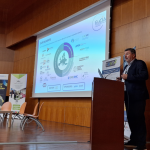
A survey of participants during the Mid-Year Review on 25 June confirmed a positive level of engagement and satisfaction with ECCA’s activities. Participants recognised ECCA’s progress in bringing together the composites ecosystem, while highlighting opportunities to further strengthen policy influence and accelerate the deployment of circular solutions. Over the coming months, members expect ECCA to focus on translating the alliance’s work into concrete EU legislation, creating demand for recycled composite materials, demonstrating commercially viable recycling solutions, improving traceability through digital tools, and strengthening collaboration across the value chain and with end-users.
2026 General Assembly
The working groups will report on their progress over the second half of 2026 at ECCA’s 2nd General Assembly in Brussels on 3 December. The programme will feature plenary sessions, working group meetings, and extensive networking opportunities.